
Delhi Police arrested a gas agency owner for allegedly hoarding and black marketing LPG cylinders, seizing 459 cylinders in a raid.

Former CEA Arvind Subramanian called for research in the area and urged the NSE Centre for Behavioural Science in Finance, Economics and Marketing to explain why as the economy has been going down, the stock market has been going up.

It has been testing times in the recent months for investors who were fortunate enough to have been a part of the spectacular rally witnessed in the stock markets.

India significantly increased piped natural gas (PNG) connections in March as the government accelerates the expansion of cleaner fuel networks amid global supply disruptions.

A disruption in the supply of LPG cylinders caused by tensions in the Strait of Hormuz is impacting Indian kitchens, leading to restaurant closures, price hikes and a surge in demand for electric cooktops.

Bangladesh is importing 5,000 tonnes of diesel from India through a cross-border pipeline on Tuesday, according to officials. The fuel consignment will enter Bangladesh through the Parbatipur point, said Muhammad Rezanur Rahman, chairman of the Bangladesh Petroleum Corporation (BPC).

'We are profoundly energy-dependent on the Gulf. That dependency must now be redirected towards the United States, because we require American permission to procure oil.' 'We additionally require Iranian permission to acquire oil from that source. So India now has to seek two separate permissions merely to secure its energy supply.' 'Should we be compelled to source from America, or from Venezuela -- which is, in effect, American-controlled supply -- that will inevitably carry a price premium, an elevated shipping cost, and a considerably extended delivery timeline, given the distances involved.'

Two individuals were arrested in Thane, Maharashtra, with a large quantity of charas valued at 4.31 crore. The arrests were made in the Ambernath area, and the suspects have been charged under the NDPS Act.

Analysts say long-term investors may still benefit, but recommend limiting bullion exposure to around 10 per cent.

'We have lost 70-80 per cent of our business from foreign guests.'

The benchmark BSE Sensex's trailing 12-month price-to-earnings (P/E) multiple has declined to 20.2x, its lowest since May 2020, driven by a record $42 billion FPI selloff since September 2024 and concerns over corporate earnings and economic growth.

Stock market investors this week would track the renewed tariff tensions between the US and China, domestic inflation data, besides, quarterly earnings from blue-chips HCL Tech, Infosys and Reliance Industries would also drive the momentum in equities, analysts said.

Among Sensex firms, Trent, HDFC Bank, Adani Ports, ICICI Bank, Bajaj Finserv, Bharat Electronics, Titan and Asian Paints were the major laggards. However, State Bank of India, Infosys, Axis Bank and Maruti were among the gainers.

'Except for extremely conservative investors, others can consider allocating 10 to 20 per cent of their portfolio to small caps.'

The government has assured citizens that there is no need to panic book LPG cylinders, as uninterrupted supply to households is being ensured despite the ongoing conflict in West Asia.

The BSE Sensex and the Nifty 50 declined around 4.5 per cent each since the start of the West Asia conflict.

The Securities and Exchange Board of India (Sebi) has introduced an abridged prospectus to simplify IPO disclosures, making them more accessible for investors. This concise summary will accompany detailed offer documents, providing key information in an easy-to-understand format.

The International Energy Agency (IEA) has proposed immediate demand-side measures, including remote work, lower speed limits, and reduced air travel, to mitigate the impact of a global oil supply shock caused by Middle East disruptions.
It's not just India that saw a drop in stock market fortunes in 2011.

Equity markets fell on Monday, with benchmark indices recording their worst session in over two months amid caution ahead of the US Federal Reserve's (Fed's) policy announcement and renewed uncertainty over the US-India trade deal. Sustained selling by foreign portfolio investors (FPIs) also weighed on sentiment.

Margin Trading Facility (MTF) provides an avenue for traders to magnify their potential returns by trading with borrowed money; however, it carries inherent risks. While the lure of increased purchasing power is strong, responsible engagement with MTF requires having a clear understanding of the MTF feature. In this blog, we will explore the key do's and don'ts of those who are considering using MTF.

Finance Minister Nirmala Sitharaman on Sunday announced an increase in the Securities Transaction Tax (STT) on Futures and Options trade with a view to discouraging small investors from speculative trading in derivatives, which led to a sharp decline in the stock market.

'Long-term investors seeking sustainable gains from resilient, fundamentally strong companies may go for these funds.'
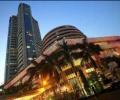
Giving a thumbs up to the Union Budget 2010-11, which has offered tax relief to common man, experts termed the proposals as balanced and good for the stock market.

The big question is whether Trump is any longer in command of the situation. For all practical purposes, the war seems set to cascade as the US is preparing for a potential ground operation in Iran and threatens to destroy 'bridges next, then electric power plants', points out Ambassador M K Bhadrakumar.

'It is far too early to celebrate the numbers.' 'They are still fairly weak compared to the pre-pandemic level.'

With domestic markets turning choppy, investors are increasingly scouting for opportunities overseas to diversify portfolios and hedge against a weakening rupee.

Prime Minister Narendra Modi convened the Cabinet Committee on Security to address the impact of the West Asia conflict on Indian citizens, focusing on safeguarding them from the conflict's effects and ensuring the smooth flow of essential supplies.
Shortage of trained professionals in the financial markets has prompted the need for specialised courses in stock markets and commodity training.

Sensex and Nifty post steepest weekly loss in over a year, falling nearly 3 per cent.
An FIR has been filed against a gas agency in Lucknow for allegedly illegally storing domestic LPG cylinders and attempting to sell them on the black market.

Foreign portfolio investors (FPIs) withdrew a substantial amount from Indian equities in the first half of March, driven by geopolitical tensions, rupee depreciation, and concerns about crude oil prices.

S&P Global Ratings warns that Indian oil marketing companies like IOC, BPCL, and HPCL may face reduced profit margins due to rising crude oil prices and government pressure to maintain stable retail prices.

Trading sentiment in the equity market will be guided by macroeconomic data announcements, global trends and quarterly earnings from IT major TCS this week, analysts said. Stock markets would also be tracking trading activity of foreign investors who remained net sellers of Indian equities in September.

The United States, which entered this war in expectation of a short, sharp win along the Venezuela model, is now preparing for deeper involvement in a conflict it does not fully control, without the allies it typically relies on, against an adversary that is not behaving as expected, in a global environment that is already absorbing economic shock. Prem Panicker continues his must read daily blog on the Gulf War.

Delhi Police busted a racket involving the tampering and sale of expired food and cosmetic products, arresting one man allegedly involved in altering expiry dates and reselling the goods as fresh stock.

Households should moderate large discretionary expenses for the time being.
'They should prioritise essential spending. They should maintain an emergency fund covering 6 to 12 months of expenses.'

At the heart of this debate is Section 3(d) of the Patents Act, a safeguard designed to prevent drugmakers from extending monopoly protection through trivial modifications to existing medicines.
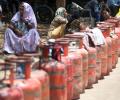
Maharashtra minister Mangal Prabhat Lodha defends his request for LPG cylinders for Jain temples, claiming criticism is part of a larger anti-Hindu narrative.

Shares of Tata Technologies, an arm of Tata Motors, made a dream stock market debut on Thursday, listing with a huge premium of 140 per cent, against the issue price of Rs 500. The stock of the company which provides engineering and product development digital services listed at Rs 1,199.95, registering a sharp jump of 139.99 per cent from the issue price on the BSE. It further zoomed 180 per cent to Rs 1,400.
